I am delighted to be teaching at the Leh Indian Glaciology Summer School in June! Applications are now open until April 10, 2026.
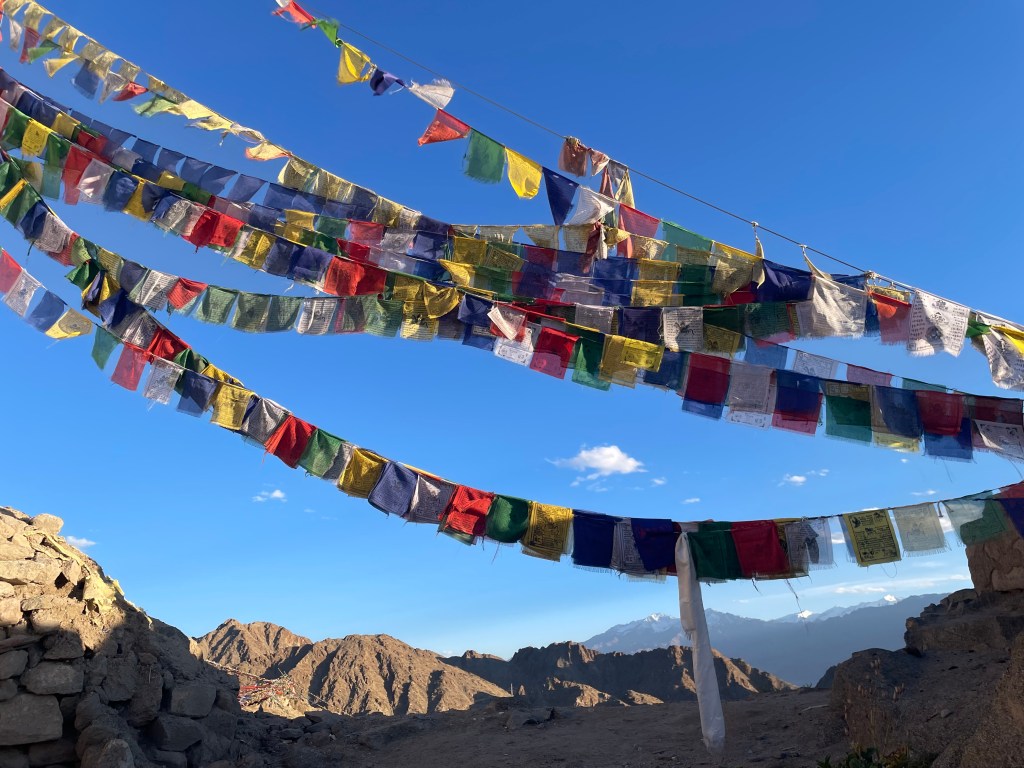
The LIGSS-2026:Remote Sensing of Himalayan Glaciers will focus on equipping young and emerging researchers from India and abroad with advanced skills in satellite and drone-based glacier monitoring. The school will emphasize the application of optical and microwave remote sensing techniques to map glacier geometry, dynamics, and mass balance, with particular attention to debris-covered glaciers in the Himalaya.
The program will cover stereo photogrammetry using drone imagery for high-resolution DEM generation, SAR-based DEMs, radar and LiDAR altimetry for glacier surface elevation and elevation change detection, and methodologies for DEM co-registration and bias correction. Participants will learn techniques for geodetic glacier mass balance estimation, ice velocity retrieval from optical and SAR data, and integration of multi-sensor datasets for improved glacier monitoring.
Special emphasis will be placed on the strengths and limitations of optical versus microwave datasets under complex Himalayan conditions, including cloud cover, seasonal snow, and debris mantling. The curriculum integrates in-person lectures by 5 core teachers, hands-on computational labs using real satellite and UAV datasets, evening research seminars, networking with 15+ national and international experts and field excursions to Khardung Glacier (5400 masl) and ice stupas to connect remote observations with field realities. Collaborative group projects will focus on developing complete remote-sensing workflows—from data acquisition and processing to uncertainty assessment and interpretation.
Beyond technical training, the school prioritizes mentorship and scientific exchange through close interaction with instructors and tutors. By strengthening expertise in advanced remote sensing, multi-sensor data fusion, and glacier change quantification, the program aims to build a new generation of scientists capable of delivering robust, reproducible, and policy-relevant assessments of Himalayan glacier change.
 Aleah Sommers